Shortness
of Breath
A complete, medically grounded guide to dyspnea — what causes it, when it is an emergency, how it’s diagnosed, and how to find relief. From anxiety to heart failure, no cause left unexplained.
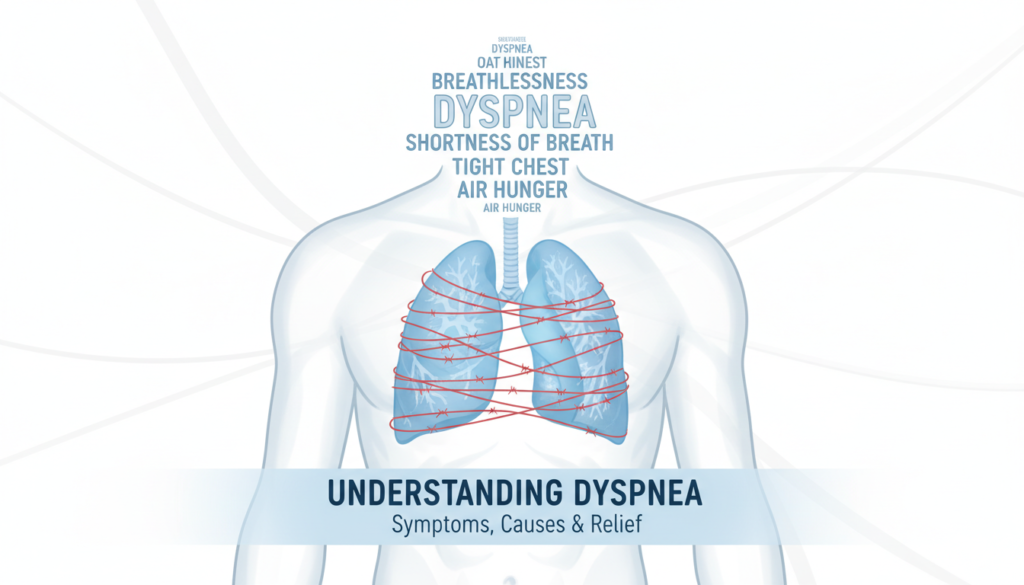
Shortness of breath — medically termed dyspnea (pronounced dis-NEE-ah) — is the subjective sensation of uncomfortable or difficult breathing. It may feel like you cannot get enough air, your chest is too tight to expand fully, or your breathing requires unusual effort. It is one of the most distressing symptoms a person can experience, and one of the most common reasons for emergency department visits worldwide.
Dyspnea is a symptom, not a diagnosis — meaning it is always caused by an underlying condition. It can range from a brief episode during intense exercise (normal) to a persistent, disabling symptom signalling serious cardiovascular or respiratory disease. Identifying the cause quickly is critical because some causes are immediately life-threatening.
Acute Dyspnea
Develops over minutes to hours. Always warrants urgent evaluation. Most serious causes — pulmonary embolism, heart attack, pneumothorax — present this way.
Subacute Dyspnea
Develops over days to weeks. Common in pneumonia, heart failure exacerbation, pleural effusion, and worsening COPD. Requires prompt medical review.
Chronic Dyspnea
Persists for more than 4–8 weeks. Common in COPD, asthma, heart failure, anaemia, obesity, and deconditioning. Requires systematic diagnostic workup.
Certain patterns of shortness of breath signal a life-threatening emergency requiring immediate action. Do not wait to see if these improve on their own.
Never Wait More Than a Few Minutes
If shortness of breath is severe, sudden, or worsening rapidly — call emergency services first and assess second. Conditions like pulmonary embolism, tension pneumothorax, and acute heart failure deteriorate very quickly. Early intervention is dramatically more effective than delayed intervention.
The lungs are the most direct source of breathing difficulty. Any condition that reduces the lungs’ ability to expand, transfer oxygen, or clear secretions will cause dyspnea — from mild to severe.
Asthma
A chronic inflammatory airway condition causing episodic reversible bronchoconstriction. Causes wheezing, chest tightness, cough, and breathlessness — classically triggered by allergens, exercise, cold air, or respiratory infections. Affects over 300 million people globally and is highly treatable with inhaled therapies. Severe asthma attacks (status asthmaticus) are life-threatening emergencies.
COPD (Chronic Obstructive Pulmonary Disease)
COPD is a progressive, largely irreversible lung disease caused primarily by long-term smoking, characterised by airflow obstruction. It encompasses chronic bronchitis (persistent cough with mucus) and emphysema (destruction of alveoli). Breathlessness in COPD is typically progressive — patients describe how activities that were once easy become increasingly difficult over years. Exacerbations, often triggered by infections, can be severe and fatal.
Pneumonia
Infection of the lung parenchyma — bacterial, viral, or fungal — causing alveoli to fill with fluid and inflammatory cells, impairing gas exchange. Presents with breathlessness, fever, cough (often productive), and pleuritic chest pain. Severity ranges from mild (outpatient treatment) to severe (ICU admission). COVID-19 pneumonia can cause prolonged, severe respiratory compromise.
Pneumothorax (Collapsed Lung)
Air entering the pleural space causes partial or complete lung collapse. Primary spontaneous pneumothorax occurs in tall, thin young men without underlying lung disease. Tension pneumothorax — where air accumulates under pressure — is a rapidly fatal emergency causing mediastinal shift, cardiovascular collapse, and death within minutes if untreated. Presents as sudden, severe, sharp chest pain with acute breathlessness.
Pulmonary Embolism (PE)
A blood clot lodging in the pulmonary arteries obstructs blood flow to the lung, causing sudden breathlessness, pleuritic chest pain, rapid heart rate, and sometimes haemoptysis (coughing blood). PE is a major cause of preventable death and is associated with prolonged immobility, surgery, cancer, and clotting disorders. The larger the clot, the greater the haemodynamic compromise — massive PE causes circulatory collapse.
Other Lung Causes
- Pulmonary fibrosis: Progressive scarring of lung tissue causing worsening exertional breathlessness, dry cough, and characteristic velcro-like crackles on auscultation
- Pleural effusion: Fluid accumulation between the lung and chest wall compresses the lung, causing breathlessness that worsens lying flat
- Lung cancer: Tumours can obstruct airways, cause pleural effusions, or directly compress structures causing breathlessness — often alongside cough and weight loss
- Interstitial lung disease: A group of conditions causing inflammation and scarring of lung parenchyma, resulting in progressive exertional dyspnea
- COVID-19 / Long COVID: Acute COVID can cause severe pneumonia; post-COVID lung changes and autonomic dysfunction cause persistent breathlessness in millions
The heart and lungs are functionally inseparable — when the heart cannot pump efficiently, fluid backs up into the lungs, causing breathlessness. Cardiac dyspnea is one of the most important categories to identify due to its treatment implications and mortality risk.
| Condition | Key Features | Specific Sign | Urgency |
|---|---|---|---|
| Heart Failure | Breathlessness on exertion and at rest, ankle swelling, fatigue | Orthopnea (worse lying flat), paroxysmal nocturnal dyspnea | Urgent |
| Heart Attack (MI) | Sudden breathlessness ± crushing chest pain, sweating, nausea | May present as breathlessness without pain, especially in women and diabetics | Emergency |
| Arrhythmias | Palpitations with breathlessness, dizziness, possible syncope | Rapid, slow, or irregular heartbeat palpable at the wrist | Urgent |
| Cardiac Tamponade | Fluid compressing the heart — breathlessness, hypotension, muffled heart sounds | Beck’s triad: hypotension, JVD, muffled heart sounds | Emergency |
| Valvular Disease | Progressive breathlessness on exertion, murmur present | Aortic stenosis: exertional syncope; Mitral stenosis: pink frothy sputum | Chronic — review |
| Pulmonary Hypertension | Progressive exertional dyspnea, fatigue, right heart failure signs | Symptoms disproportionate to apparent fitness; diagnosed on Echo/cath | Urgent workup |
Orthopnea — A Key Cardiac Clue
Orthopnea is breathlessness that worsens when lying flat and improves sitting or standing upright. It is a classic sign of left heart failure — when lying down, fluid redistributes from the legs into the pulmonary circulation, overwhelming an already failing pump. Patients often describe needing 2–3 pillows to sleep. Orthopnea is highly specific to cardiac or severe pulmonary causes.
Anaemia
Low haemoglobin reduces oxygen-carrying capacity. Causes breathlessness on exertion, fatigue, pallor, and racing heart. Highly treatable once cause identified.
Obesity
Excess abdominal weight restricts diaphragm movement and reduces lung volume, causing exertional dyspnea. BMI over 35 significantly impairs respiratory mechanics.
Metabolic Acidosis
Diabetic ketoacidosis, kidney failure, or sepsis causes the body to breathe faster (Kussmaul breathing) to blow off CO₂ and compensate for acidosis.
Thyroid Disease
Both hyperthyroidism (high thyroid hormone) and hypothyroidism can impair breathing — through tachycardia and cardiac effects, or through reduced respiratory muscle function respectively.
Pregnancy
Progesterone increases respiratory drive and the growing uterus elevates the diaphragm, causing breathlessness in up to 70% of pregnancies — usually benign but must be evaluated.
High Altitude
Reduced atmospheric oxygen pressure causes hyperventilation and breathlessness. Altitude sickness above 2,500m can progress to life-threatening pulmonary oedema (HAPE).
Nocturnal breathlessness — dyspnea that occurs or worsens at night — is a clinically important symptom pattern with several specific causes worth understanding.
| Pattern | Most Likely Cause | Distinguishing Feature |
|---|---|---|
| Worse lying flat (orthopnea) | Left heart failure, diaphragmatic weakness | Needs 2–3 pillows to sleep; improves when sitting up |
| Wakes from sleep gasping (PND) | Heart failure (paroxysmal nocturnal dyspnea) | Wakes 1–3hrs after falling asleep; must sit at window for relief |
| Associated with snoring / apneas | Obstructive sleep apnoea (OSA) | Partner reports breathing stops; morning headaches; daytime sleepiness |
| Wheezing at night | Nocturnal asthma | Audible wheeze; responds to inhaler; cough at night |
| With acid reflux symptoms | GERD-triggered bronchospasm | Heartburn, sour taste, worsens after large meals |
| Anxiety-driven breathlessness | Nocturnal panic attacks | Terror, palpitations, tingling; SpO₂ normal on monitoring |
Anxiety is one of the most common causes of breathlessness, particularly in younger adults — and one of the most frequently misdiagnosed. During anxiety or panic, the body activates the sympathetic nervous system, causing hyperventilation, chest tightness, and a subjective inability to breathe deeply enough, which paradoxically worsens the sensation of breathlessness.
Features That Suggest Anxiety-Related Dyspnea
- Breathlessness accompanied by palpitations, tingling in hands or feet, or dizziness
- Difficulty taking a “satisfying” deep breath — a common anxiety complaint
- Symptoms worse during stressful situations or occurring in “waves”
- Oxygen saturation remains normal (98–100%) despite feeling breathless
- Improved by distraction, controlled breathing exercises, or reassurance
- Associated with other anxiety symptoms — excessive worry, sleep disturbance, intrusive thoughts
Always Rule Out Physical Causes First
Anxiety-related breathlessness is a diagnosis of exclusion — it should only be attributed to anxiety once cardiac and respiratory causes have been formally ruled out with appropriate tests. Pulmonary embolism, arrhythmia, and asthma can all mimic panic attacks. A young person presenting to emergency with breathlessness should receive an ECG and oxygen saturation measurement before anxiety is assumed.
The 4-7-8 Breathing Technique for Acute Relief
Breathe in through your nose for 4 seconds
Expand your belly (diaphragmatic breathing), not just your chest. Keep your shoulders relaxed and down.
Hold your breath for 7 seconds
Hold comfortably. This pause activates the parasympathetic nervous system and reduces sympathetic overdrive.
Exhale slowly through pursed lips for 8 seconds
A longer exhale than inhale activates the vagal brake and rapidly lowers heart rate and breathing effort. Repeat 3–4 cycles.
Some degree of breathlessness during vigorous exercise is completely normal and expected — it reflects an increase in oxygen demand that the cardiovascular and respiratory systems are working to meet. The concern lies in breathlessness that is disproportionate to the level of exertion, occurs at low activity levels, persists unusually long after stopping, or is accompanied by other symptoms.
Normal Exercise Dyspnea
Expected during intense effort. Resolves within 5–10 minutes of stopping. No associated chest pain, palpitations, or dizziness. Improves with fitness training.
Exercise-Induced Asthma
Bronchoconstriction triggered 5–10 minutes into or after exercise, causing wheeze and breathlessness. Common and easily managed with a pre-exercise reliever inhaler.
Cardiac Breathlessness
Breathlessness disproportionate to effort, with chest discomfort, palpitations, or near-fainting during exercise — always warrants urgent cardiac evaluation.
Deconditioning
Breathlessness with minimal activity after periods of inactivity, illness, or bed rest. Cardiovascular and respiratory function diminish rapidly without regular use.
The Medical Research Council (MRC) Breathlessness Scale is the internationally used tool to grade dyspnea severity. It helps clinicians track progression and guides treatment decisions in chronic respiratory conditions like COPD and heart failure.
Grades 4–5 require urgent specialist referral. Any new Grade 3+ breathlessness requires medical evaluation within days.
Diagnosing the cause of shortness of breath requires a structured approach that starts with history and examination, then moves to targeted investigations. The specific tests ordered depend on the suspected cause.
- Pulse oximetry: Measures blood oxygen saturation (SpO₂). Normal is 95–100%. Below 92% is concerning; below 88% typically requires supplemental oxygen. Quick and non-invasive — available on most smartphones with a clip-on oximeter.
- Chest X-ray: Identifies pneumonia, pneumothorax, pleural effusion, pulmonary oedema (heart failure), enlarged heart, and masses. Essential first-line imaging for most presentations.
- ECG (electrocardiogram): Detects arrhythmias, heart attack, right heart strain pattern of PE, and pericarditis. Should be performed in all new significant breathlessness presentations.
- Spirometry (lung function tests): Measures airflow and lung volumes. Distinguishes obstructive patterns (asthma, COPD) from restrictive patterns (fibrosis, obesity). The diagnostic cornerstone for chronic respiratory conditions.
- Blood tests: Full blood count (anaemia), D-dimer (PE screening), BNP/NT-proBNP (heart failure marker), troponin (heart attack), thyroid function, ABG (arterial blood gas — gold standard for respiratory failure).
- CT Pulmonary Angiogram (CTPA): Definitive imaging for pulmonary embolism; also detects interstitial lung disease and pulmonary fibrosis in high-resolution format (HRCT).
- Echocardiogram: Ultrasound of the heart assessing systolic and diastolic function, valve disease, pericardial fluid, pulmonary pressures, and wall motion abnormalities.
- Cardiopulmonary Exercise Test (CPET): Gold standard for differentiating cardiac vs respiratory causes of exertional dyspnea — measures oxygen consumption, heart rate, and ventilatory response during progressive exercise.
Treatment of shortness of breath is entirely cause-dependent — there is no single solution. The following covers both cause-specific treatments and immediate comfort measures.
Cause-Specific Treatments
| Cause | Primary Treatment |
|---|---|
| Asthma | Short-acting β₂ agonist inhaler (SABA) for acute relief; inhaled corticosteroid (ICS) for prevention; avoid triggers |
| COPD | Long-acting bronchodilators (LABA/LAMA); pulmonary rehabilitation; smoking cessation; vaccines; oxygen therapy in severe disease |
| Heart failure | ACE inhibitors/ARBs, beta-blockers, diuretics (furosemide removes excess fluid); low-salt diet; fluid restriction; cardiac rehabilitation |
| Pulmonary embolism | Emergency anticoagulation (heparin/DOAC); thrombolysis for massive PE; oxygen; supportive care in ICU |
| Pneumonia | Appropriate antibiotics or antivirals; rest; adequate hydration; oxygen if SpO₂ <94%; hospitalisation if severe |
| Anaemia | Iron supplements or IV iron (iron deficiency); B12 injections (B12 deficiency); treat underlying cause; blood transfusion if severe |
| Anxiety/Panic | Controlled breathing techniques; CBT; SSRIs; beta-blockers for acute somatic symptoms; mindfulness training |
| Pleural effusion | Thoracocentesis (drainage) for symptomatic relief; treat underlying cause (heart failure, malignancy, infection) |
Immediate Self-Help Measures
- Upright positioning: Sitting upright or leaning slightly forward (“tripod position”) optimises diaphragm function and reduces work of breathing — consistently reported as the most relieving position
- Fan to the face: Cool airflow across the face stimulates the trigeminal nerve, reducing the subjective sensation of breathlessness — evidence-based, cheap, and surprisingly effective
- Pursed-lip breathing: Breathing in through the nose and out through pursed lips (as if blowing out candles) slows breathing rate and maintains positive airway pressure — particularly helpful in COPD
- Remove tight clothing: Anything restricting the chest or abdomen reduces breathing capacity — loosen belts, collars, and bras during episodes
- Calm, cool environment: Heat increases oxygen demand; a cooler environment reduces the metabolic contribution to breathlessness
Pulmonary Rehabilitation — Underused But Highly Effective
For COPD, heart failure, and post-COVID breathlessness, pulmonary rehabilitation — a structured programme of supervised exercise, education, and psychological support — produces improvements in breathlessness, exercise tolerance, and quality of life equivalent to or better than many medications. It is consistently underutilised and underreferred. Ask your doctor if you are eligible.
Breathe Easier — Start With Understanding
Shortness of breath has over 60 known causes — most are treatable. Whether acute or chronic, sudden or gradual, the path to relief begins with an accurate diagnosis from a qualified clinician.
Do not dismiss persistent breathlessness as “just being unfit.” Your body is telling you something. Listen to it.
⚕️ Medical Disclaimer: This guide is for informational purposes only and does not replace professional medical advice, diagnosis, or treatment. If you are experiencing severe, sudden, or worsening shortness of breath, call emergency services immediately. Always consult a qualified healthcare provider about your symptoms.
📌 SEO Reference — Post Metadata
Title: Shortness of Breath: Causes, Symptoms, Emergency Signs & Treatment Guide
Meta Description: What causes shortness of breath? From asthma and anxiety to heart failure and pulmonary embolism — a complete guide to dyspnea: causes, emergency signs, MRC scale, diagnosis and treatment.
Slug: shortness-of-breath-guide
Focus Keyword: shortness of breath
Secondary Keywords: shortness of breath causes dyspnea shortness of breath at night shortness of breath lying down sudden shortness of breath shortness of breath and chest pain shortness of breath anxiety shortness of breath after exercise shortness of breath treatment when is shortness of breath emergency shortness of breath heart failure shortness of breath COPD shortness of breath normal oxygen level MRC breathlessness scale breathing difficulty causes shortness of breath COVID